
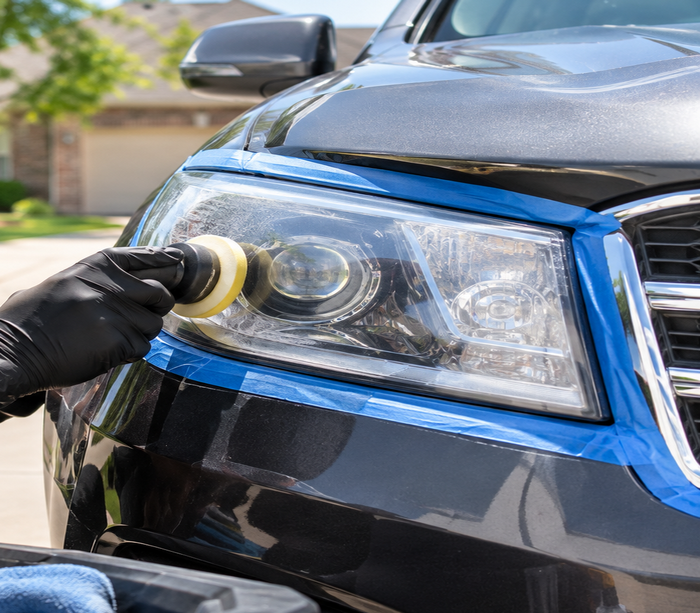
Mobile headlight restoration requires more than sanding and polishing a cloudy lens; it also requires us to protect your vehicle surrounding the headlight.
Professional technicians prepare the work area before using abrasives, compounds, and protective products.
That preparation matters because your vehicle’s paint, trim, grille, and other nearby surfaces should not become part of the restoration process!
When you choose a mobile service in Houston, you should understand how the technician will protect your vehicle while restoring the headlights.
Why We Protect Your Vehicle
Professional mobile headlight restoration uses abrasive materials during the sanding stage.
The technician needs to remove oxidized plastic from the headlight surface. However, the technician does not want that abrasive material contacting the vehicle’s paint or trim.
Therefore, proper masking and preparation help control the work area.
What Areas Need Protection?
Technicians typically pay close attention to surfaces surrounding the headlight, including:
- Painted fenders
- Hood edges
- Front bumpers
- Grilles
- Chrome trim
- Plastic trim
- Seals and surrounding components
The exact preparation depends on the vehicle’s design.
Step 1: Clean the Work Area
Before applying protective materials, the technician cleans the headlight and surrounding area.
This removes dirt and road contamination that could interfere with the restoration.
A clean work area also makes it easier to identify the actual condition of the lens.
Step 2: Mask Surrounding Surfaces
Next, the technician masks the area surrounding the headlight.
Masking creates a physical barrier between the restoration area and nearby vehicle surfaces.
This step becomes especially important during wet sanding and polishing.
Why Does Masking Improve the Process?
Masking helps the technician focus on the headlight.
Instead of worrying about accidentally contacting nearby paint or trim, the technician can work within a defined area.
That makes the restoration process more controlled and predictable.
Step 3: Control Sanding and Polishing
During mobile headlight restoration, the technician controls the sanding process carefully.
The technician uses appropriate abrasives and works across the lens rather than aggressively attacking one small area.
The polishing stage also requires control.
Polishing compounds can spread beyond the immediate work area, so careful technique helps minimize unnecessary mess.
A Quick Story from a Houston Driveway
Imagine watching a technician prepare your vehicle before touching the headlights. Instead of immediately grabbing a sanding tool, the technician cleans the area and carefully protects the surrounding paint.
At first, you might wonder why the preparation takes time.
Then the technician begins sanding and polishing, and you realize the preparation keeps the work focused exactly where it belongs—the headlight lens.
What Should Customers Look For?
Customers should look for a technician who takes preparation seriously.
Before restoration begins, you should expect the technician to:
- Inspect the vehicle.
- Clean the headlight.
- Identify nearby surfaces.
- Protect the surrounding area.
- Use controlled sanding techniques.
- Control polishing materials.
- Clean the work area afterward.
These steps help create a professional restoration experience.
Why Mobile Restoration Requires Extra Awareness
A traditional shop may have a dedicated work bay.
Mobile technicians work in driveways, parking lots, workplaces, and other customer locations. Therefore, they need to adapt to different environments.
A professional mobile headlight restoration technician should consider:
- Available workspace
- Lighting
- Weather conditions
- Vehicle position
- Surrounding surfaces
- Cleanliness of the work area
The technician needs enough space to work safely and accurately.
Does Mobile Service Damage Your Paint?
Properly performed restoration should not damage your vehicle simply because the service takes place outside a shop.
The technician protects surrounding surfaces and controls the restoration equipment.
However, customers should always choose a service provider that demonstrates careful preparation and professional technique.
How Headlight Hero’s Approaches Vehicle Protection
Headlight Hero’s treats vehicle preparation as an important part of the restoration process.
The technician focuses on the headlight while protecting the surrounding areas from unnecessary contact with sanding materials and polishing compounds.
For Houston customers, that means you can have professional mobile headlight restoration performed at a convenient location without treating your driveway like an uncontrolled work area.
What Happens After Restoration?
Once the technician completes sanding, polishing, and protective treatment, the work area receives another inspection.
The technician checks the headlights and surrounding surfaces.
The goal is simple:
Restore the headlights while leaving the surrounding vehicle clean and protected.
That final inspection also gives the technician an opportunity to identify any areas that need additional attention.
Protect Your Vehicle Final Thoughts
Mobile headlight restoration should protect more than the headlight itself. It should also respect the vehicle surrounding the work area.
Cleaning, masking, controlled sanding, careful polishing, and final cleanup all contribute to a professional restoration process.
We bring our professional headlight restoration service directly to your home, office, or other convenient location. Experience the convenience of professional mobile service and enjoy clearer, brighter headlights without leaving your driveway.
For more information about our services visit us on Pinterest, Yelp, AllBusines.Com, or NextDoor
Contact Headlight Hero’s today to schedule your mobile headlight restoration and experience the convenience of professional service brought directly to you.
For Houston drivers, the convenience of mobile service should never mean sacrificing careful vehicle preparation. A skilled technician can bring the restoration directly to you while taking the necessary steps to protect your vehicle along the way.