
What makes professional headlight restoration different? Professional restoration uses a controlled process that removes oxidation, refines the plastic lens, restores clarity, and adds protection against future UV damage.
Instead of simply making a cloudy lens look better temporarily, a professional technician evaluates the lens condition and chooses the appropriate restoration process.
Headlight lenses face constant exposure to sunlight, heat, road debris, moisture, and environmental contaminants. Over time, that exposure can turn clear plastic yellow, hazy, or cloudy.
Fortunately, Headlight Hero’s can reverse much of that surface damage without replacing the entire headlight assembly.
How Professional Restoration Improves Headlight Clarity
What makes professional headlight restoration different? The answer starts with preparation and technique.
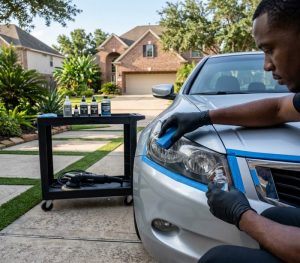
A professional restoration typically includes:
- Headlight inspection to determine the severity of oxidation.
- Vehicle preparation to protect surrounding paint and trim.
- Deep cleaning to remove dirt and surface contamination.
- Wet sanding to remove damaged and oxidized plastic.
- Surface refinement to create a smooth lens.
- Machine polishing to restore optical clarity.
- UV protection or ceramic coating to help protect the restored surface.
- Final quality inspection to verify the finished result.
A DIY product may provide a quick improvement, but professional equipment and controlled techniques allow the technician to address deeper oxidation more consistently.
Why Surface Preparation Matters
I often compare headlight restoration to refinishing a damaged surface. You cannot polish away every problem if the damaged material remains on the lens.
A professional technician removes the deteriorated surface before polishing and protecting the lens.
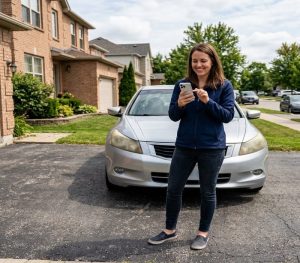
For example, imagine pulling into your driveway after work and noticing that one headlight looks yellow while the other looks slightly cloudy. You wipe both lenses, but nothing changes. The problem sits in the damaged plastic itself, not on top of it.
That situation illustrates what makes professional headlight restoration different. The technician works below the visible haze instead of simply covering it.
Professional Protection Makes a Difference
Restoring clarity represents only part of the process. The lens also needs protection after restoration.
UV-protective coatings and ceramic protection help defend the restored surface against sunlight and environmental exposure. Proper protection can help maintain the appearance of the lens longer than a basic polishing treatment alone.
Headlight Hero’s approaches restoration as a complete process rather than a quick cosmetic treatment. The goal involves restoring clarity, improving the appearance of the vehicle, and protecting the finished lens.
Why Professional Restoration Can Beat Replacement
Headlight replacement can become expensive, especially when modern vehicles use complex assemblies. Professional restoration offers an alternative when the lens remains structurally sound and the damage primarily affects the outer plastic.
So, what makes professional headlight restoration different? It combines inspection, preparation, controlled abrasion, polishing, and protection into one coordinated process.
We bring our professional headlight restoration service directly to your home, office, or other convenient location. Experience the convenience of professional mobile service and enjoy clearer, brighter headlights without leaving your driveway.
For more information about our services visit us on Pinterest, TikTok Yelp, or NextDoor
Contact Headlight Hero’s today to schedule your mobile headlight restoration and experience the convenience of professional service brought directly to you.
Bottom line: Professional headlight restoration differs from quick DIY polishing because it addresses oxidation systematically, refines the lens surface, and adds protective treatment after restoration.