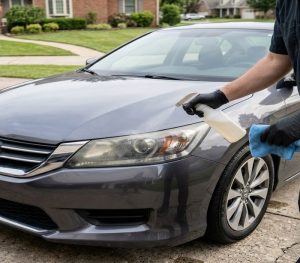
Skipping clear coat after sanding can cause freshly restored headlights to turn yellow, hazy, and cloudy again much faster than expected.
Sanding removes the oxidized plastic from the lens, but it also leaves the surface without the protection it needs against UV rays, heat, moisture, and road contaminants.
If you have ever restored a headlight only to watch it become yellow again months later, the missing protection may explain the problem.
I always look at headlight restoration as a complete process—not simply a sanding job. The lens needs both clarity and protection!
How Skipping Clear Coat Leaves Headlights Vulnerable
Headlight lenses typically use polycarbonate plastic, which can degrade when ultraviolet radiation repeatedly hits the surface. Manufacturers add protective coatings to help shield the plastic from environmental damage.
When a technician sands away the damaged outer layer, that original protection disappears. Therefore, skipping clear coat or another suitable UV-resistant protective coating leaves the newly exposed plastic vulnerable.
The restoration may initially look fantastic. However, without proper protection, sunlight begins attacking the surface again.
The simple answer: Clear coat or another appropriate UV-protective finish helps protect a restored headlight lens from UV exposure and premature oxidation.
What Happens After Skipping Clear Coat?
When you continue skipping clear coat after the sanding and polishing stages, several problems can develop:
- UV exposure: Sunlight accelerates plastic degradation.
- Rapid oxidation: The lens can become hazy and yellow again.
- Surface deterioration: Unprotected plastic can lose its smooth finish.
- Shorter restoration life: The clear appearance may not last as long.
- More maintenance: You may need another restoration sooner.
For Houston drivers, UV exposure deserves particular attention. Intense Texas sunlight can put considerable stress on exterior automotive plastics throughout the year.
Stop Skipping Clear Coat with Proper Headlight Protection
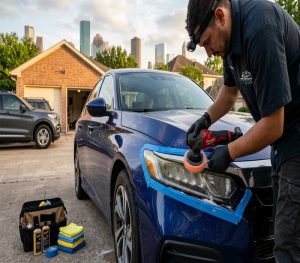
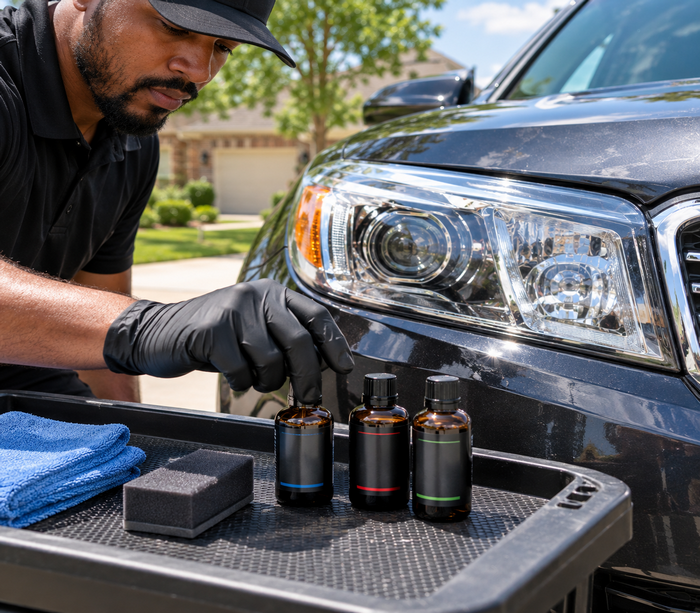
A professional restoration should address both the damaged surface and the protection that follows. After wet sanding removes oxidation, the technician can polish the lens to restore transparency and then apply an appropriate UV-resistant coating.
That final step makes a major difference.
Why UV Protection Matters After Headlight Restoration
Think about it this way: sanding fixes the damage, while UV protection helps defend the restored surface.
A short story explains the problem well. Imagine restoring a cloudy headlight on Saturday and admiring its crystal-clear appearance that evening. A few months later, the same lens starts turning yellow again because the freshly exposed plastic never received adequate UV protection.
That is why skipping clear coat can undermine an otherwise careful restoration.
At Headlight Hero’s, we focus on restoring the lens and protecting the finished surface. Our mobile headlight restoration service helps Houston-area drivers restore faded, oxidized headlights without automatically replacing the entire assembly.
We bring our professional headlight restoration service directly to your home, office, or other convenient location. Experience the convenience of professional mobile service and enjoy clearer, brighter headlights without leaving your driveway.
For more information about our services visit us on Pinterest, Yelp, AllBusines.Com, or NextDoor
Contact Headlight Hero’s today to schedule your mobile headlight restoration and experience the convenience of professional service brought directly to you.
Headlight Hero’s can help you avoid the common mistake of skipping clear coat and give your restored headlights the protection they need after sanding and polishing.